Hiking in Hot Weather: How to Stay Safe and Cool on Trail
I've hiked the Grand Canyon's South Kaibab Trail in July, and I've watched a fit 30-year-old collapse at 9:30 a.m. on a short desert loop outside Phoenix. Hiking in hot weather is not simply about drinking more water. It is about timing, salt, and— honestly—knowing when to bail. This guide is built from my own mistakes and the near-misses I have seen. You will get the exact heat-illness signals that matter, a hydration table you can actually remember, and the one cooling trick that saved a friend on a 108°F day in Utah.
What's in here (jump ahead)
- What does hiking in hot weather actually do to your body?
- How do you time a hike when the forecast says 100°F+?
- The real hydration and salt strategy (with a simple table)
- Early heat-illness signs that most hikers brush off
- Cooling tricks that work—and the overrated ones
- What to wear and what to leave in the car
- Quick answers to real trail questions
What does hiking in hot weather actually do to your body?
Heat changes your hike chemically. Blood goes to your skin to dump heat, and that steals flow from your gut. So you can drink a liter of water and feel bloated but still be dehydrated at the tissue level. That is the part most people miss. I learned it the hard way on a ridge above Boulder—chugged a liter at the trailhead, felt sloshy an hour later, then got a splitting headache by noon.
Your sweat rate can hit 1.5 to 2.5 liters per hour in dry heat, according to the American Council on Exercise. In humid heat, sweat drips off without cooling you, so you overheat faster. Both scenarios demand a plan beyond "bring a bottle."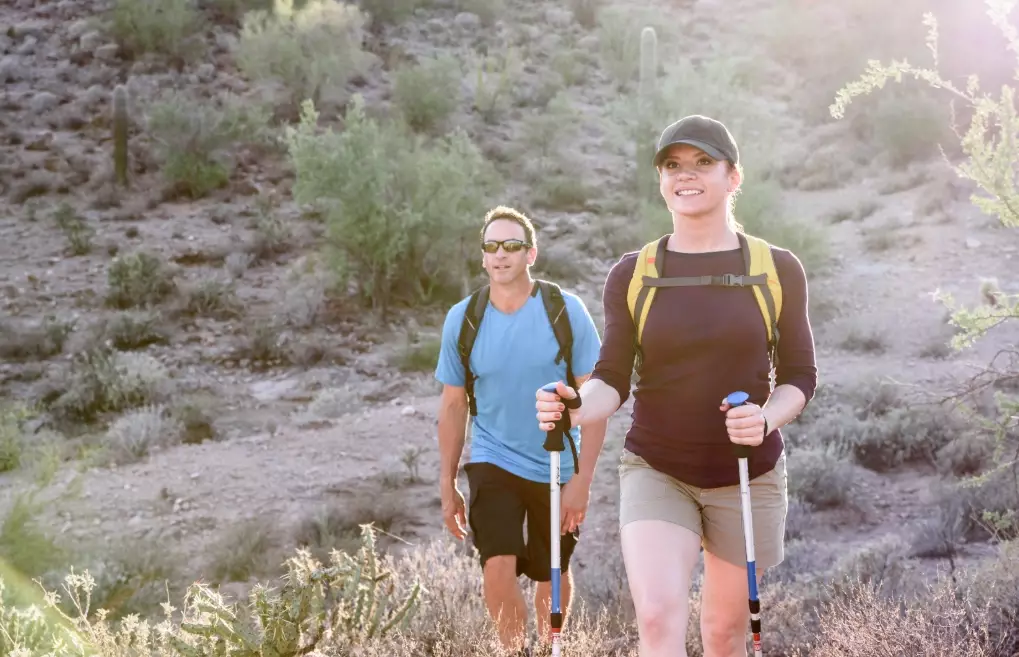
How do you time a hike when the forecast says 100°F+?
Start before dawn. Not at sunrise—before it. I aim to be on trail 30 to 45 minutes before official sunrise when the air is still 68–72°F. On a brutally hot day in Moab, I hit the trail at 5:10 a.m. and was off the exposed mesa by 9:45. The same trail at 11 a.m. would have been a different risk category.
Here is a timing framework I use. It is not perfect, but it has kept me out of trouble.
| Trail exposure | Latest start in 95–100°F | Latest start in 100–105°F | Finish target |
|---|---|---|---|
| Full sun, no shade | 5:30 a.m. | 5:00 a.m. | Before 10 a.m. |
| Partial shade (canyon walls, trees) | 6:00 a.m. | 5:30 a.m. | By 10:30 a.m. |
| Mostly shaded forest | 7:00 a.m. | 6:30 a.m. | By noon |
The "finish target" matters more than the start. If you are still climbing in full sun at 11 a.m. on a 102°F day, you are gambling. I have turned around at 8:30 a.m. on a 9-mile loop because my heart rate would not settle. No view is worth a heatstroke.
Not a fan Sun sleeves and wide-brim hats get a lot of love, but I find them too hot on dry, exposed trails unless they are white and super thin. On a canyon rim, a soaked bandana around the neck does more for me than a $60 sun hoody.
The real hydration and salt strategy (with a simple table)
Drink to thirst, plus a buffer. Sounds vague. Let me make it concrete. I pre-hydrate with 500 ml of water and a pinch of salt 45 minutes before the trailhead. On trail, I sip 150–250 ml every 20 minutes, even if I don't feel thirsty. That works out to roughly 600–800 ml per hour in moderate heat. If sweat is pouring, I add an electrolyte tab to one bottle and drink a second bottle of plain water.
Salt matters more than most hikers think. Hyponatremia (low blood sodium) can hit when you drink tons of plain water and sweat out salt. I keep a small bag of salted almonds in my hip pocket. Real food beats gels in heat because it slows the water absorption slightly and replaces salt.
Here's a non-consensus take after a decade of desert hikes: you do not need a fancy electrolyte mix with 1,000 mg of sodium per serving for a 3-hour hike. A handful of pretzels and a pinch of sea salt in your water bottle do the same job. Save the expensive mixes for 6+ hour efforts.
Early heat-illness signs that most hikers brush off
Everyone talks about confusion and collapse. Those are late signs. The early ones are subtle and I have ignored them myself.
- Goosebumps in the heat. If your skin prickles with chills while the sun is blazing, stop. That is a classic early sign of heat exhaustion.
- Stopping sweat. If you were soaked and suddenly your skin is dry, that is dangerous. It means your body quit cooling.
- Sluggish speech or a weirdly flat mood. I once snapped at a buddy for no reason on a 98°F climb. I was the one overheating. Irritability is a quiet warning.
- Headache that sits behind the eyes. Dehydration headache often starts there before it spreads.
If you see any of these, get shade, sit down, sip a salty drink, and cool your neck and wrists with water. Do not push to the summit. I have bailed at 90% of the way up twice and lived to tell it.
Cooling tricks that work—and the overrated ones
Cool your pulse points: neck, wrists, groin, armpits. A wet bandana on the neck beats a misting fan in my experience. On a 108°F day near Kanab, Utah, a friend started stumbling. We soaked her shirt, put a wet cloth on her neck, and sat in the shade of a juniper for 25 minutes. She recovered enough to walk out slowly. The trick? We also poured water on her forearms, not just her head. Head-cooling feels good but does less for core temperature.
What does not work well: cooling towels that dry out in 20 minutes in dry heat. They feel cold for a moment, then become a warm rag. I still carry one, but I wet it at every stream crossing.
What to wear and what to leave in the car
Light colors, loose fit, breathable fabric. I wear a white long-sleeve shirt in the desert, not a tank top. It sounds counterintuitive, but the sun directly on skin heats you faster. Sunscreen on exposed skin, and a wide-brim hat with a neck cord. A small umbrella? I have tried it. On exposed ridges it is a sail. In still canyon air, it is magic.
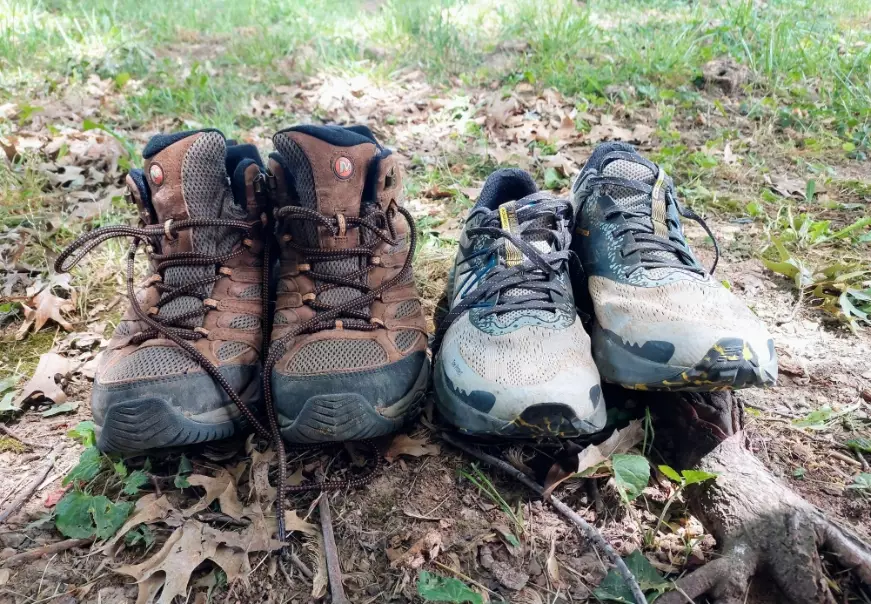
Leave in the car: heavy boots (switch to trail runners that breathe), cotton shirts, and thick socks. Cotton holds sweat, stays wet, and chafes. I learned that on a 12-mile hot-weather hike in Texas where my socks turned into sandpaper.
Quick answers to real trail questions
Is it ever safe to hike in 100°F heat with no shade?
It can be, but you need a hard cap on duration—90 minutes max for most people—and you must carry at least 2 liters per person. A better move is to skip that trail entirely and find a shaded canyon or a high-elevation route. The desert sun at 100°F is a different animal than humid 100°F. Dry heat tricks you because sweat evaporates fast and you feel fine while your core temp climbs.
How do I stop my water from getting hot by mid-morning?
Freeze half a bottle the night before and fill the rest with cold water. Wrap the bottle in a wool sock or a thin neoprene sleeve. Also, carry a small insulated flask just for ice—it melts slowly and you can drop a cube into your neck bandana at 10 a.m. That cold water on the neck does more for morale than a snack.
Why do I get a headache after hot-weather hikes even when I drink plenty of water?
Probably salt, not water. Plain water dilutes your blood sodium. Next time, add a pinch of salt and a splash of juice to one bottle, or eat something salty at the halfway point. Also, check your sunglasses—glare headaches are real on bright, hot trails. I now wear a cap with a dark underbill and it cut my late-hike headaches almost completely.
Fact-checked against American Hiking Society heat-safety bulletins and the American Council on Exercise hydration guidelines, and refined by my own field notes from desert and canyon trails.
Comments
Share your experience